
Possibilities
A local visibility service for multi-location businesses
A specialist name for helping location teams understand where they appear in search.
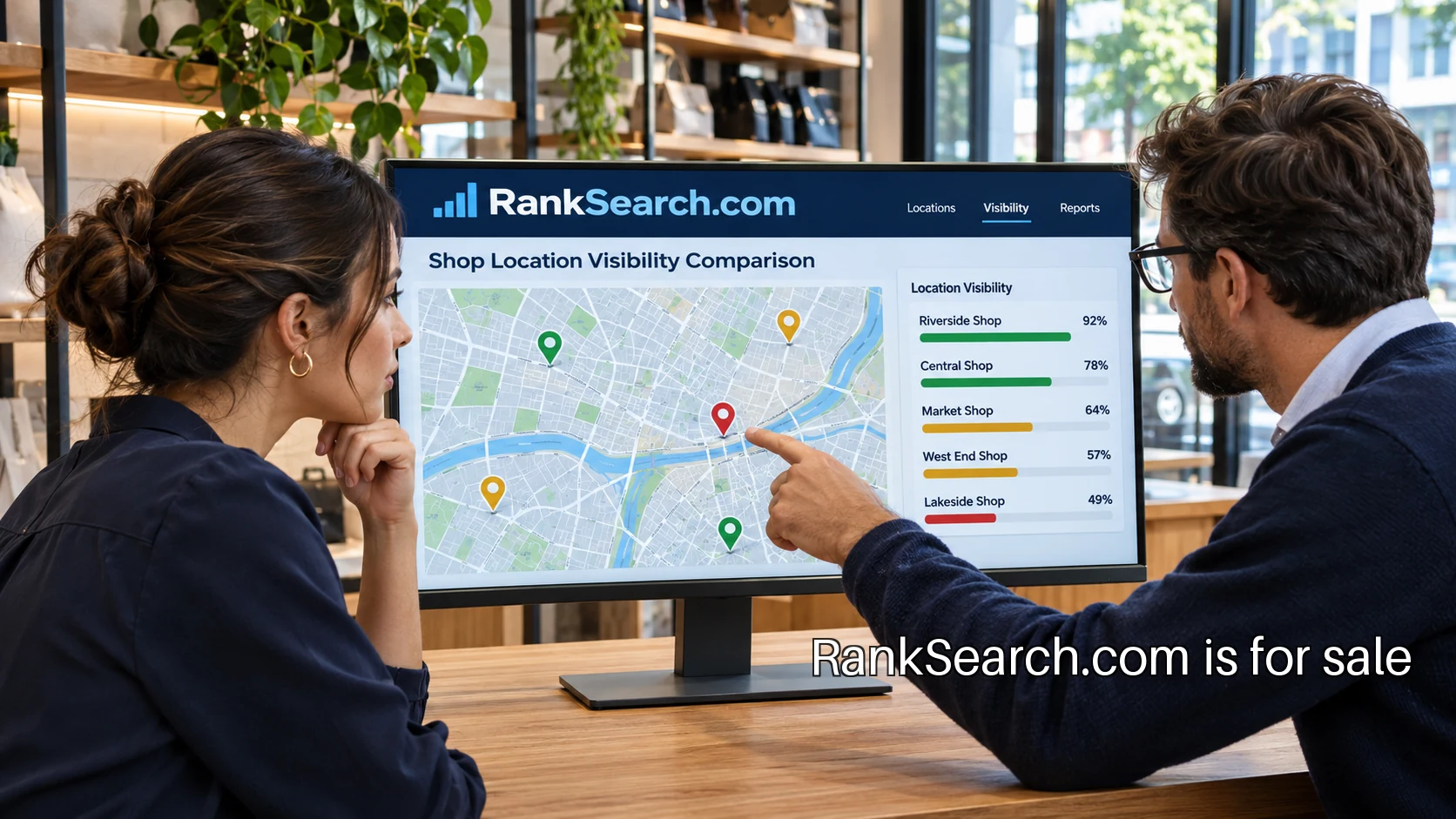
A regional manager can receive a single visibility score and still have no idea which branch needs help. Local search varies by place, intent and the state of each location's information. RankSearch.com could carry a specialist service that makes those differences understandable. The founder has a focused name for presenting location-level evidence to an operator responsible for several branches.
This is an illustrative business concept for a founder serving multi-location businesses. The first offer could be a three-location measurement pilot: establish the records, agree on the questions, collect consistent observations and deliver a review with branch-level actions. The customer buys an organized measurement process and a clear discussion, with the work scoped before collection starts.
Choose a narrow operating customer
Start with a business whose locations share a similar service but operate in different local markets. The customer might be a regional operations manager or a marketing lead who needs to compare branches fairly. Interview both the central team and a location manager. The central team may want a portfolio view while the branch needs a short list of facts it can correct this week.
Ask how location information is maintained today. Who approves hours? Who notices a closure? Who checks that the phone number and destination page match the branch? These operational questions can reveal a useful first service before the founder considers elaborate rank visualizations. A report becomes valuable when someone can act on it.
Define the measurement before collecting it
Agree on the search terms and the places from which observations will be made. Record device assumptions, collection dates and the method used. A citywide average can hide the difference between appearing near a branch and appearing across town. Preserve individual observation points so the operator can inspect the pattern instead of accepting one unexplained score.
The pilot should separate observed search placement from profile interactions. Google's Business Profile performance documentation explains the information available to verified profiles and the types of interactions reported. Review the available metrics for the actual business rather than assuming every branch will expose the same fields. Access and data availability belong in the onboarding checklist.
Make a location record people can trust
Create a record for each branch with its official name, address, phone, destination page, operating hours and the person responsible for corrections. Record the source and last verification date of each field. A discrepancy needs a short evidence note and an assigned owner. The founder should be able to explain how a fact entered the report and how it will be checked again.
Consider three fictional branches: a downtown location, a suburban location and a newer branch near the edge of the service area. The downtown branch has stable profile information but an outdated service page. The suburban branch has a holiday-hours discrepancy. The newer branch has limited historical data. These require three different conversations; a single portfolio score would flatten the work.
Deliver an action review rather than a ranking promise
A useful report has a location summary, the evidence behind each exception and a small set of proposed actions. Distinguish confirmed information errors from hypotheses about visibility. For an address mismatch, the next step might be a documented correction. For a search-placement difference, it might be a further sample or a review of how well the location page answers the relevant customer question.
The service should preserve an audit trail. Record when a change was requested, approved and observed. Subsequent movement can be discussed alongside that timeline, with other possible explanations still visible. The operator gains a practical record of what the team did, rather than a collection of claims attached to every fluctuation.
Scope the economics and the handoff
One starting structure is a fixed pilot fee for three locations followed by a recurring per-location review. That is a model to investigate with customers, not a quoted offer. Estimate collection costs, analyst review time and the effort required to resolve access problems. Define which corrections the service performs and which remain with the customer's team.
Privacy and account access deserve an explicit handoff process. Request only the permissions needed for the agreed task. Keep collection records separate from customer correspondence, and define how access ends if the pilot stops. A small service becomes much easier to manage when those ordinary responsibilities are clear from the first account.
Find the first pilot through operators
A practical distribution path is a partnership with a consultant already helping regional businesses manage their websites or location information. Show a sample branch review and ask where it would fit into the existing operating rhythm. The partner can help identify a customer with a clear owner, reliable access and willingness to review the findings.
The next step is to choose three locations and agree on the measurement locations and review questions before buying tools. Consult the official local ranking guidance while defining what can reasonably be measured and discussed. If this is the specialist business you want to introduce, Request Info starts the conversation about acquiring RankSearch.com.
A focused name for your next search business
Discuss acquiring RankSearch.com for the brand you intend to build.
Request Info