
Possibilities
A search reporting platform for independent agencies
Your own search reporting brand, from the first agency account to a full client portfolio.
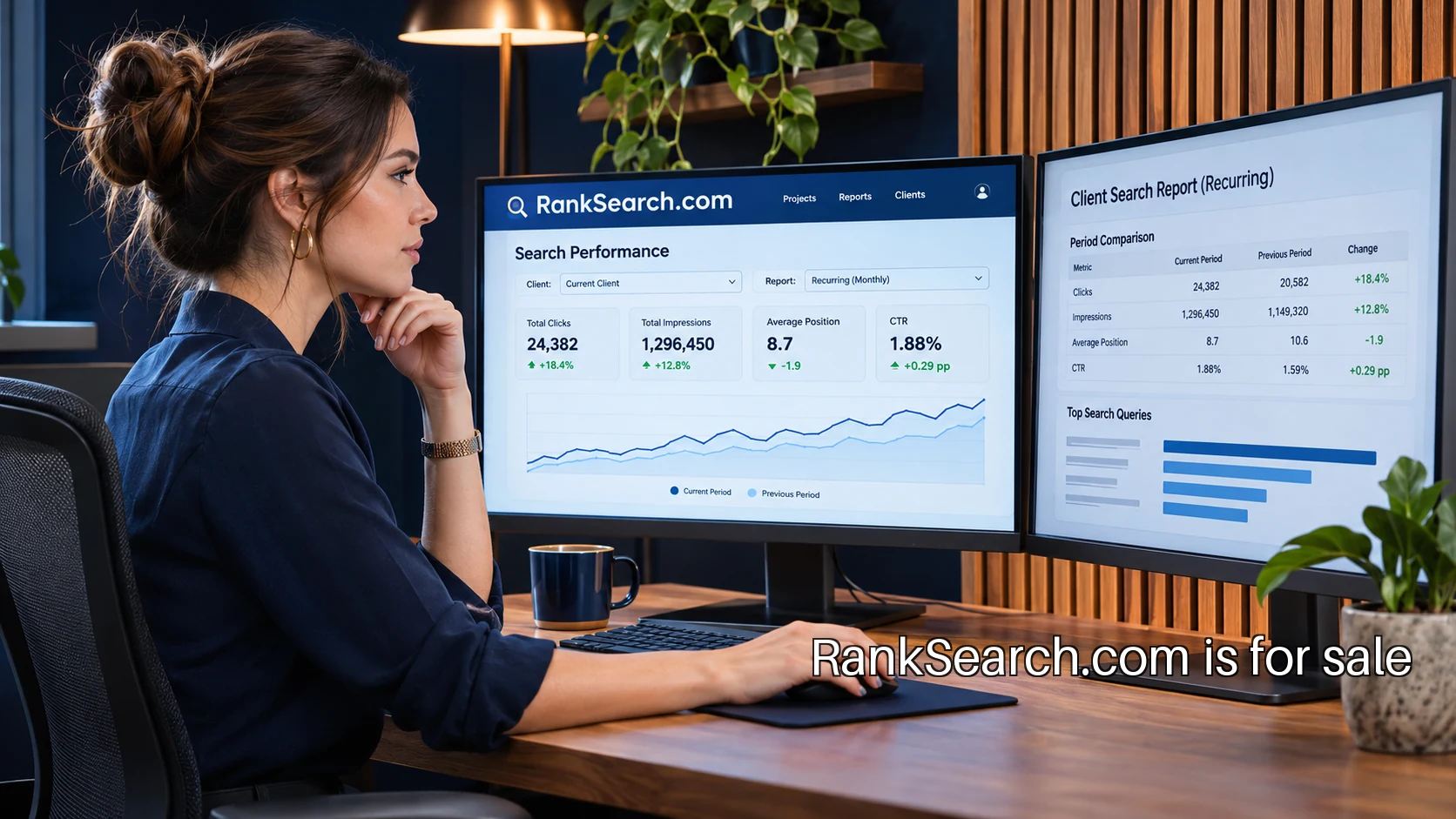
An independent agency can have enough reporting work to feel busy before it has enough recurring revenue to hire a reporting team. Each client has different access, different questions and a different version of the monthly spreadsheet. RankSearch.com could be the identity for a product that makes this work repeatable. The founder becomes the specialist behind an agency reporting workspace, with a clear name on the report and the next customer introduction.
This is an illustrative business concept. Start with agencies that manage a manageable portfolio of search clients and still prepare much of their reporting manually. The first offer should solve one recurring task: producing a trustworthy weekly exception review. It need not replace every dashboard an agency already uses. It should help the account manager identify what changed, what needs attention and what can wait until the next review.
Design the report around a meeting
Imagine an agency with twelve client sites. On Monday, an account manager wants to know which clients need a closer look before calling them. A useful first screen shows data freshness, unusual changes and outstanding actions. The manager can open one client, compare a consistent period and add a note that explains the next step. The exported version should preserve those notes rather than returning to a wall of charts.
The first customer interview should walk through an actual reporting session. Ask the manager to show the last report, the source accounts and the messages that followed. Record every manual step. Which numbers are copied? Which explanation is rewritten? Which client always asks a question the dashboard cannot answer? Those details make a stronger product brief than a list of requested integrations.
Keep definitions visible
Search metrics need context. A reader should be able to see the date range, property, device filter and source of each observation without opening a support ticket. Put that information near the chart and retain it in exports. When a definition changes, version it in the report rather than silently changing the meaning of a familiar number.
Use the source platform's documentation during implementation. The Search Console getting-started guidance describes its role in monitoring a site's presence in Google Search. Build the integration around authorized client access and the actual scope of the data. Label imported figures with their source so the agency can explain them to a client.
A query-level view and a page-level view serve different questions. One helps identify the language behind an impression; the other helps assign work to a page owner. Let the account manager move between them while preserving the comparison period. Avoid turning a change in a blended average into a conclusion about every query in the account.
Make exceptions a visible workflow
A missing connection should appear as missing data, with a practical reconnection step. It should never produce a zero that looks like a performance collapse. An incomplete period needs a visible status. An account with very little activity needs an explanation of why percentage changes can look dramatic. These ordinary cases determine whether an agency can use the product reliably across its portfolio.
For an initial pilot, define three review states: ready, needs investigation and data unavailable. Let an account manager assign an owner and leave a short note. A useful note records an observation, a possible explanation and the evidence still needed. It does not automatically translate every movement into a claim that an SEO action worked.
Test the commercial model with real effort
One possible offer is a monthly subscription based on connected client accounts, with a clear limit on the review workflow included. Treat that as a pricing hypothesis to test. Track onboarding time, support requests and the cost of maintaining each integration. Agencies with many small clients may need a different structure from those preparing detailed reports for a few large accounts.
A pilot agreement should say who connects accounts, who interprets results and who writes client recommendations. The product can organize evidence while the agency retains responsibility for its advice. This boundary also helps the founder avoid selling a software subscription that quietly requires a consulting engagement every week.
Reach agencies through a useful demonstration
A credible distribution path is a small workshop for agency account managers. Use a fictional account to demonstrate a weekly exception review, then ask participants to compare it with their current process. Offer a bounded pilot to the agencies with the clearest reporting burden. The founder should learn from their workflow before investing in a large acquisition campaign.
Before building, interview five agencies and document the common steps they would actually pay to remove. Review Google's metric definitions with the person responsible for data interpretation. A clear protocol, a useful pilot and a recognizable specialist identity give the founder a concrete starting point. To discuss acquiring RankSearch.com for that brand, use Request Info and describe the agency customer you plan to serve.
A focused name for your next search business
Discuss acquiring RankSearch.com for the brand you intend to build.
Request Info